
If you’re running WireMock OSS locally or in continuous integration, you might have wondered what it would take to move those mocks into WireMock Cloud. The good news is that it’s easier than you think. This article walks through how migration works and why teams are swapping over, so you can decide if and when to make the change.
Watch the (abridged) video version of this article:
Why Do Teams Migrate?
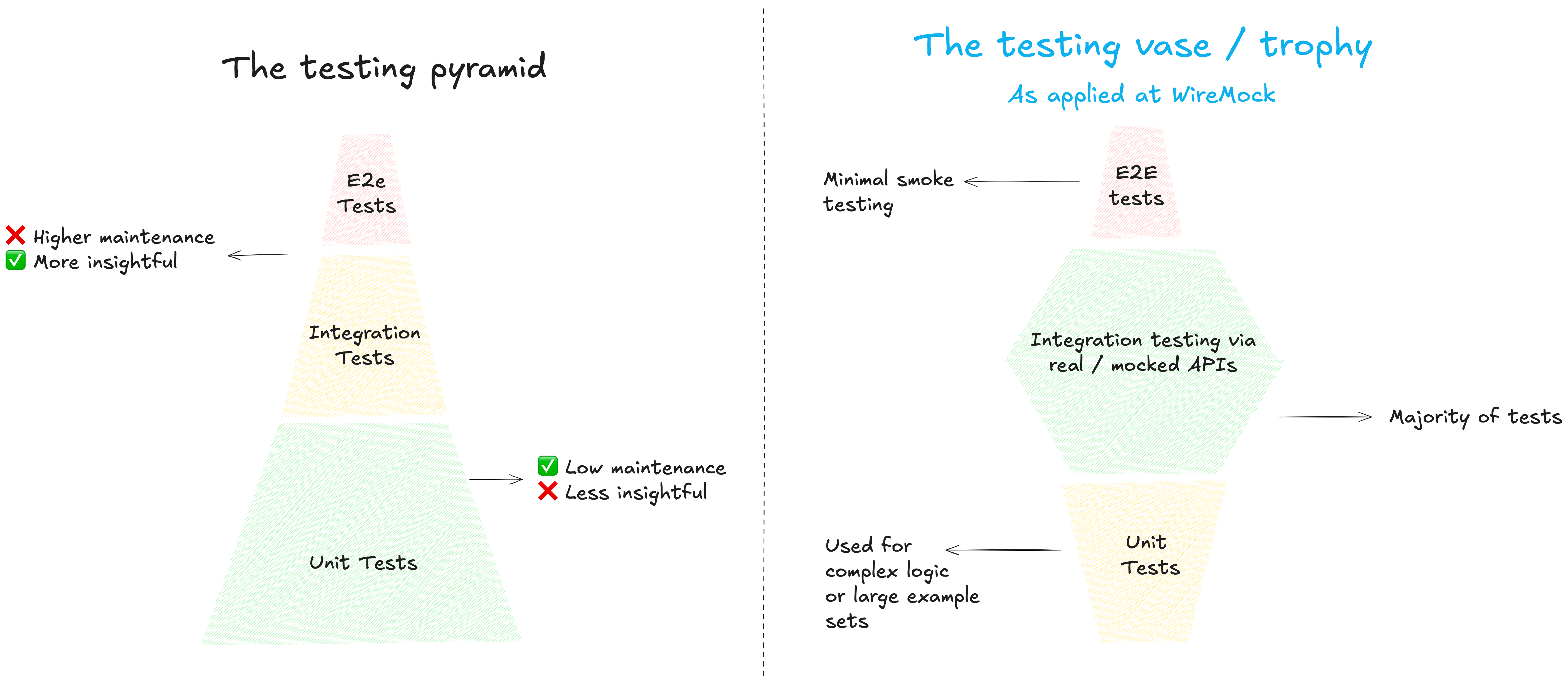
Most teams start with WireMock OSS because it’s fast, local, free, and easy to automate. It solves immediate problems, mostly if you need a solution for in-code mocking – such as a quick replacement for a flaky third-party API, or running tests against a simulated payment gateway to avoid hitting rate limits. But once you start scaling things up into simulating more complex environments, open source can become difficult to manage:
- Advanced simulation capabilities require bespoke development. WireMock OSS is a library built to support diverse development needs. It can be extended to support powerful functionality – after all, that’s what we’re doing with WireMock Cloud – but for larger deployments, this requires non-trivial engineering work. Capabilities such as dynamic responses and stateful mocking will require scripting, and an underlying understanding of simulation principles. This can slow time to value and result in sub-optimal usage of the tool.
- Missing visibility and control. As your codebase and use cases evolve, mocks tend to multiply across projects, teams, and repositories. With a decentralized open source tool, there is no single source of simulated truth – which means it’s hard to get visibility into which mocks exist, who’s maintaining them, or whether they still match the APIs they’re simulating.
- Manual maintenance: To mitigate the previous issues, engineers will often need to devote time to manual fixes for issues such as missing features, duplicate stubs appearing in different projects with slightly different configurations, or different teams running different versions with incompatible features. This also becomes a distraction and slows delivery.
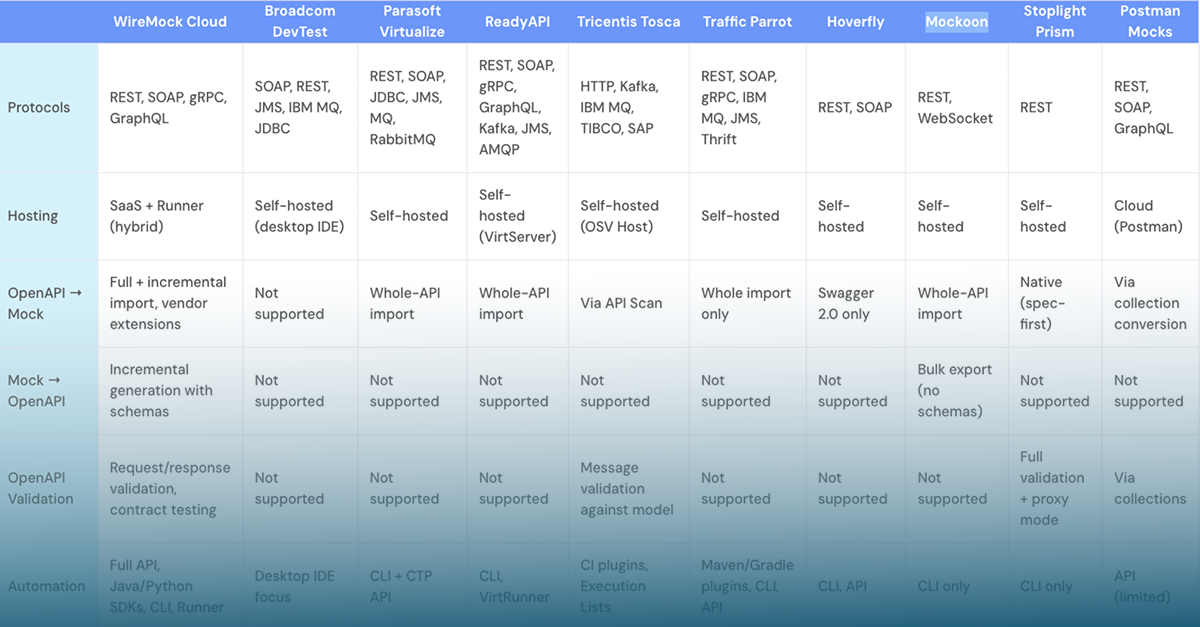
That’s where WireMock Cloud steps in. As an enterprise-grade API simulation platform, it gives you a single source of truth for your mocks, a vastly expanded feature set, and the ability to collaborate and scale without limitations. Let’s take a closer look at each of these elements:
Collaboration
Your team can review, co-edit, and version control mocks without digging through repos. Meanwhile, non-developers can participate through the web interface while developers work in code. Audit logs track every change, and role-based access control keeps your mocks secure and compliant.
Expanded feature set
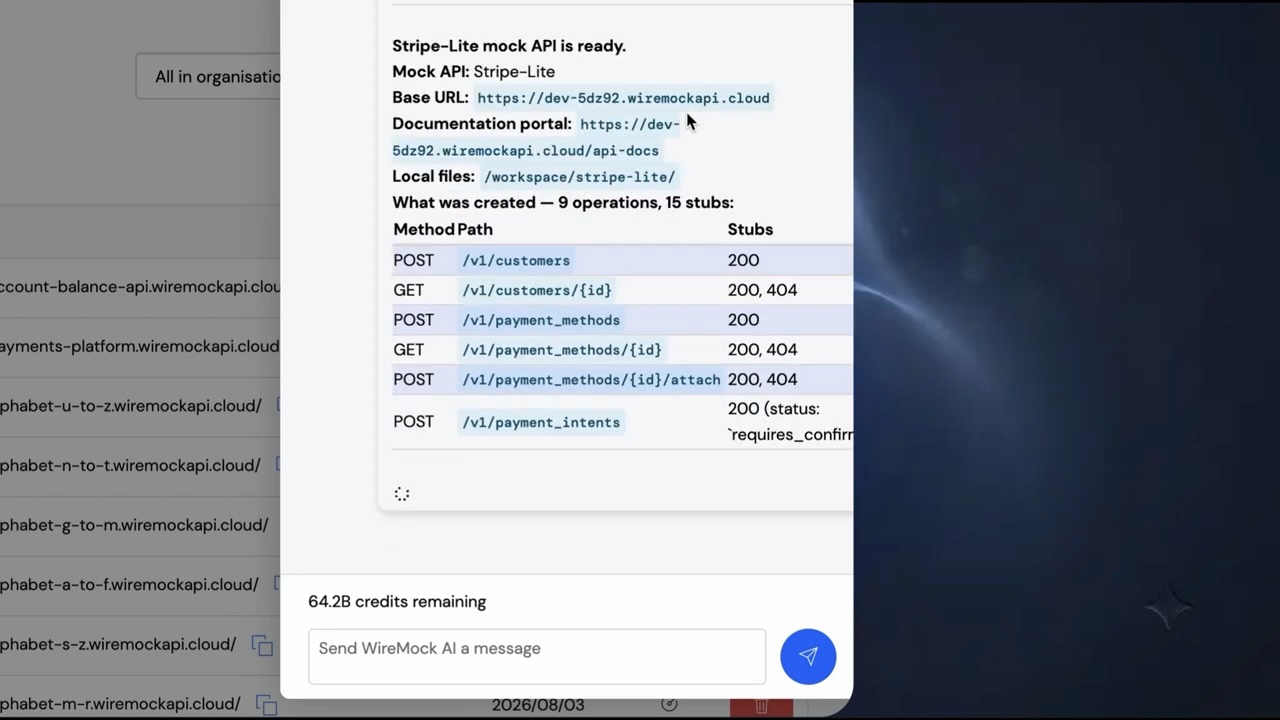
WireMock Cloud boasts an array of features that the OSS version lacks: multiple import methods (OpenAPI, Postman, HAR, CSV), stateful mocking for multi-step flows, AI-powered generation via MCP integration, chaos mode for resilience testing, automatic OpenAPI generation, and contract validation to catch drift before production.
Scale
Migrating to WireMock Cloud extends your OSS expertise rather than replacing it. Spin up isolated environments without managing infrastructure. Use WireMock Runner in CI/CD for fast execution while pulling configuration from the cloud. The platform handles traffic spikes automatically—no capacity planning required.
How to Migrate Your Mocks in 3 Simple Steps
While it may take time to realise your team needs a more comprehensive platform, transitioning to WireMock Cloud takes next to none. Let’s explore the three steps to migration.
1. Export your existing mocks
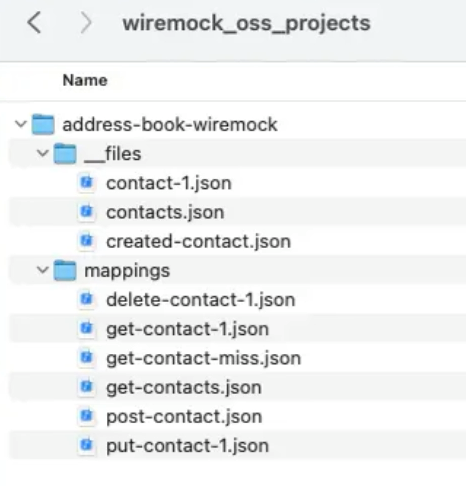
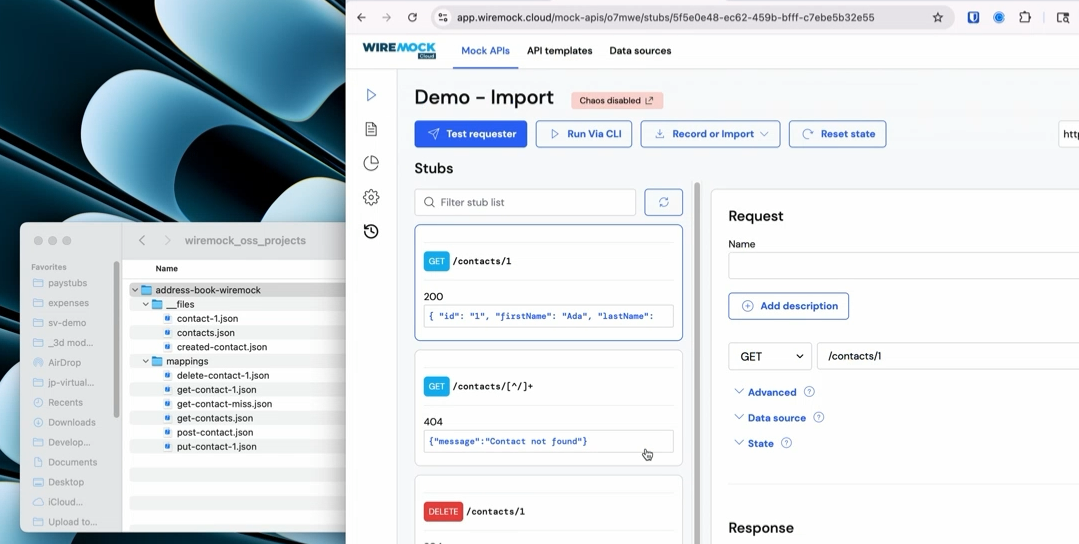
If you’re using the standalone jar or docker image, your mocks live under the mappings and __files directories of a WireMock OSS project folder. They’re ready to import as is.
2. Import into WireMock Cloud
Log into your WireMock Cloud account and create a new mock API. You’ll see an option to import from WireMock OSS. Drag and drop the project folder into the import dialog, and WireMock Cloud will automatically reconstruct your endpoints, matchers, and responses. This includes JSON and XML templates, dynamic response bodies, and even request matchers. No manual rewrites are necessary.
3. Connect your environments
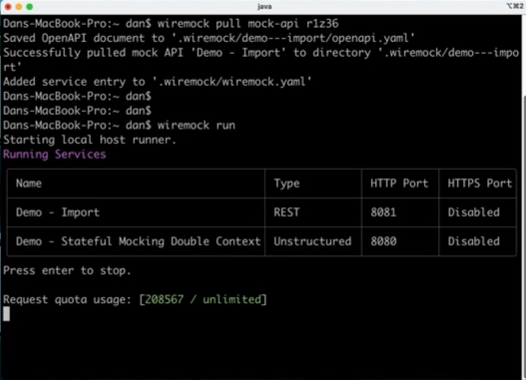
Once imported, your cloud instance can serve the same mocks instantly. But now they’re hosted, versioned, and shareable. You can use the WireMock Runner if you want to run them near your tests or switch your test configs to point to the cloud URL. Either way, there are no code changes to your test logic.
Migrating Larger Implementations
Not every WireMock setup is a handful of stubs in a local folder. Many teams have built full-blown internal API simulation platforms around WireMock OSS, running it as a centralized mock server with custom security layers, homegrown collaboration features, and bespoke integrations.
If that sounds like your organization, you already know the maintenance burden that comes with it - from onboarding new developers through bug fixes and security patches that compete with feature work for engineering time, access management, scaling resources, and more. At the end of the day, you end up managing your open source mock server like you would an actual service in your environment.
Migrating this kind of implementation to WireMock Cloud is a bigger undertaking than moving a few local stubs, but it’s more straightforward than you might expect.
- As you’ve already seen, your stubs are portable, as is the core logic and the way you use capabilities such as dynamic response templating.
- With the introduction of WireMock Runner, it’s easier than ever to keep running your simulations close to your code - whether that’s locally, in your cluster, or in your CI/CD pipeline. You get the benefits of centralized configuration and the power of the WireMock Cloud features without rearchitecting how your tests execute. A single Runner instance supports multiple mock APIs, which matters when you’re consolidating dozens of internal services.
- For paid customers, the WireMock team works directly with you during your proof of concept. These are the engineers who built and maintain the open source framework, and they’ve seen migrations ranging from a few dozen stubs to enterprise-wide platforms. They’ll help you map your existing setup to Cloud capabilities and identify any gaps before you commit.
What Next?
Once you migrate to WireMock Cloud, the sky is the limit. You’ll probably start by exploring features that weren’t available in OSS – enable chaos testing to simulate network failures and latency spikes, import OpenAPI specifications to auto-generate mocks, or set up contract validation to catch drift between your mocks and actual APIs before it reaches production.
As your team becomes comfortable with the platform, integrate it deeper into your CI/CD pipeline using WireMock Runner for fast, isolated testing while maintaining cloud-based configuration and collaboration. The transition from OSS isn’t just about moving your existing mocks – it’s about unlocking capabilities that transform how your entire team approaches API development, testing, and collaboration.
Try WireMock Cloud for free or get in touch to discuss larger migrations.