WireMock Standalone has long been a popular choice for developers who want to run WireMock as a mock server in their environment (such as in private cloud or corporate network). With the introduction of WireMock Runner, you now have another option for simulating APIs wherever your code runs. We’ve created this comparison to help you understand how these two tools are similar, and where they differ.
Prefer watching to reading? Watch Dan cover the same topic in our recent video:
WireMock Standalone and WireMock Runner – What’s the Difference?
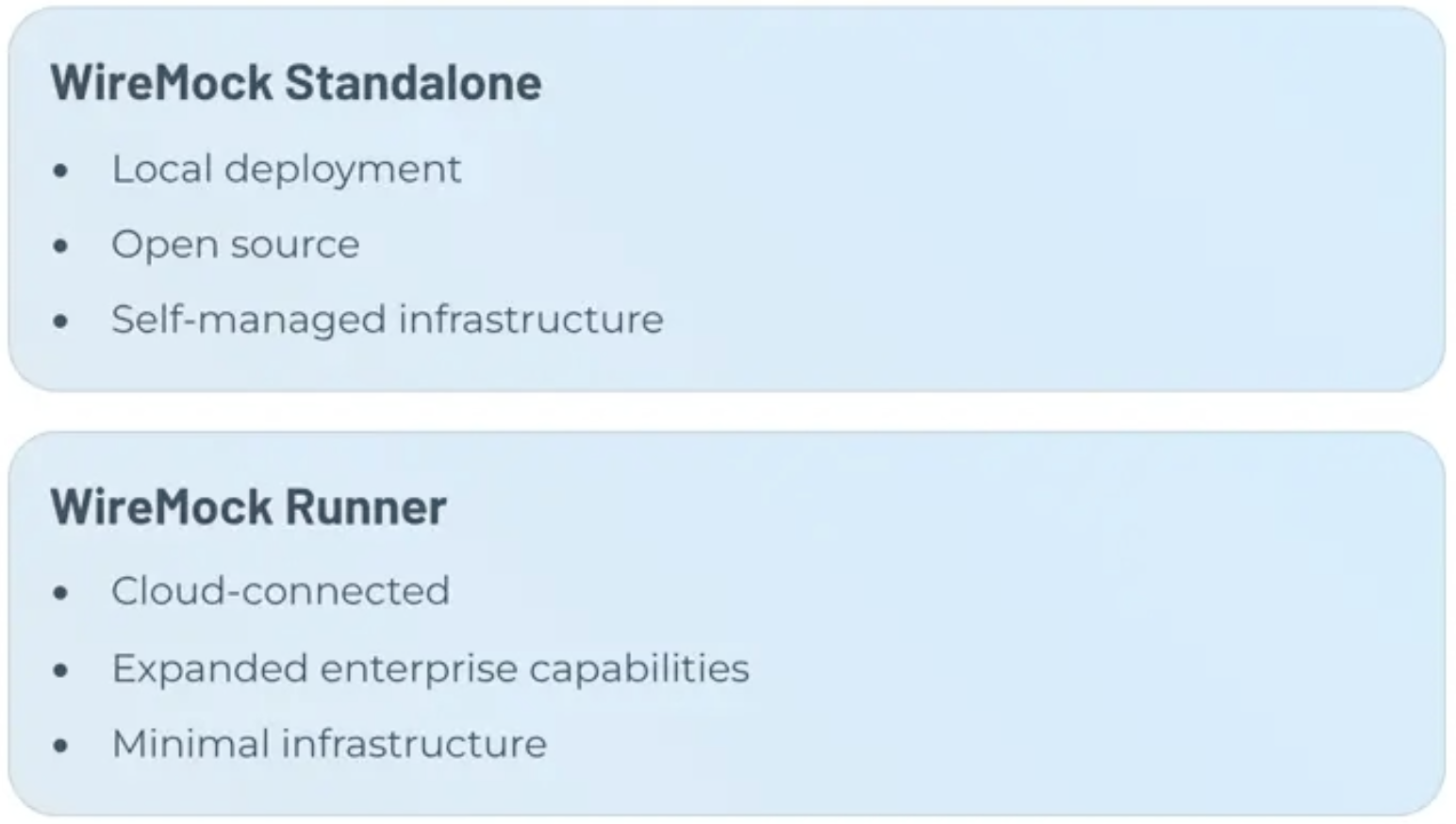
- WireMock Standalone refers to running the open source WireMock library as a standalone service. It can be deployed either as a JAR file or a Docker image, and configured via the WireMock APIs.
- WireMock Runner is part of WireMock Cloud. It lets you run API simulations in CI, local dev, or pre-production, with the mocks specifications managed in the cloud. With Runner, you have access to the scale and enterprise features of WireMock Cloud - including AI-native simulation, stateful mocking, version control, data sources, and more.
How Do They Run?
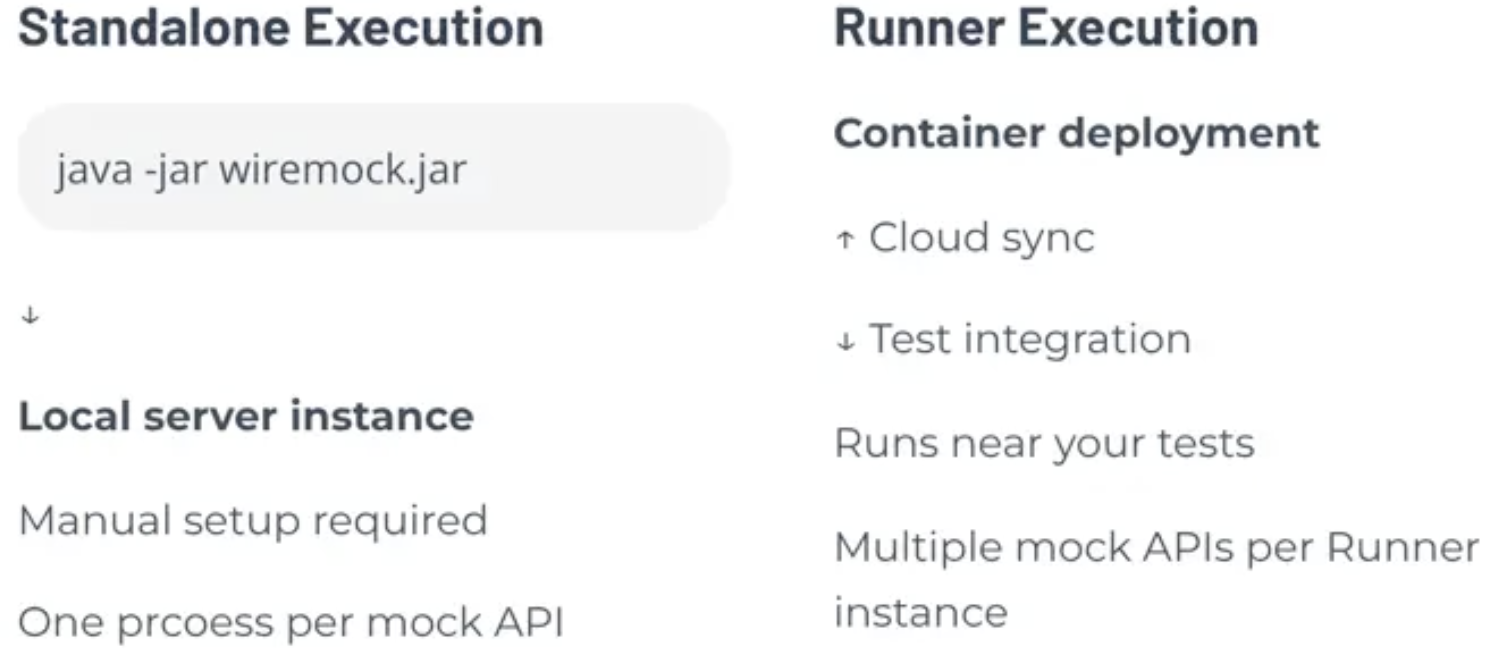
To use WireMock standalone, you download a JAR and run the program with Java or Docker. You control the server, the file system, the startup flags, and everything else. It’s recommended to use one process per mock API to ensure that different mock services don’t interfere with each other during development or testing.
The WireMock Runner is a lightweight container that syncs with WireMock Cloud. It gives you all your cloud-hosted mocks, but runs them close to your tests or services – no server setup required. In addition, single runner instance supports multiple running mock APIs, dramatically reducing demands on system resources.
What Are Their Sources of Truth?
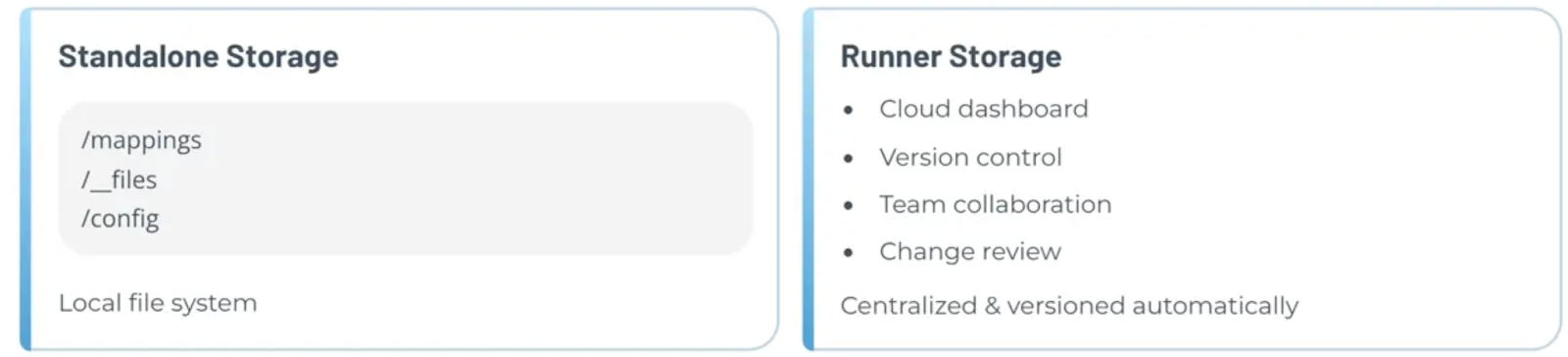
With WireMock Standalone, your mocks live in local folders: mappings and __files – this is fine for single developers, but difficult to coordinate across teams. WireMock Runner solves this problem by storing mocks in WireMock Cloud. Anyone on the team can edit, version, review, and deploy changes without hand editing JSON files.
Environment Management
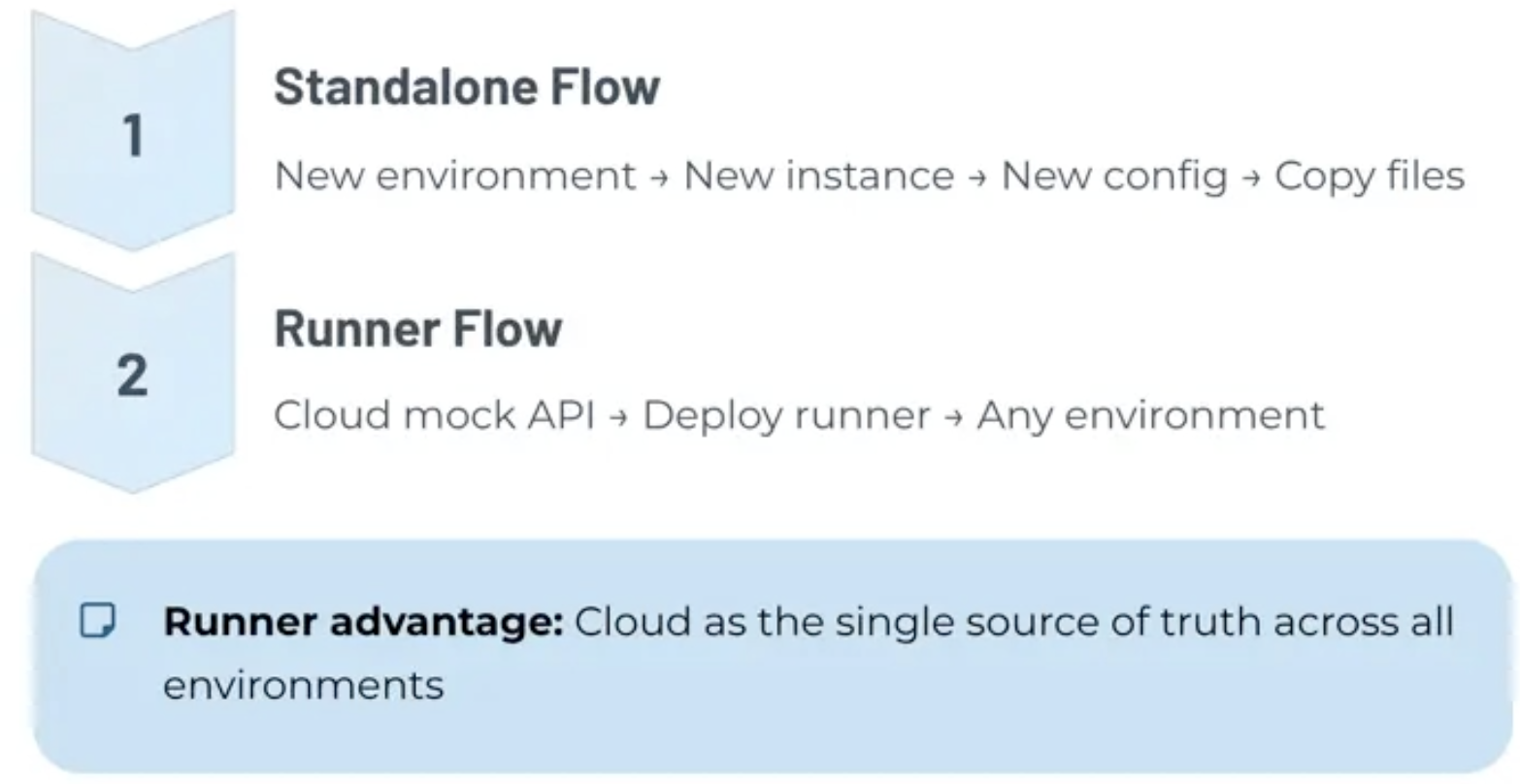
With WireMock standalone, every new environment needs its own instance, its own config, and its own files. However, with WireMock Runner, you can spin up environments instantly – your cloud mock API serves as the source of truth, and Runner simply pulls the latest version. This makes it ideal for CI pipelines and ephemeral environments.
How Do They Compare Across Infrastructure and Governance?
Establishing effective governance is a frequent pain point in API mocking, and the choice of WireMock’s Runner or standalone version is crucial in deciding how much time is spent on this hurdle.
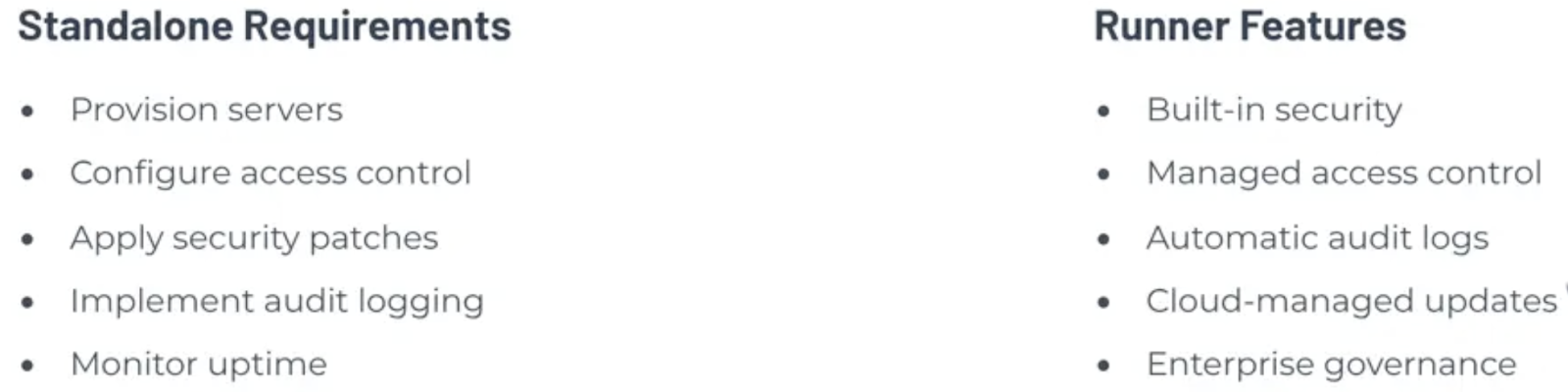
With WireMock standalone, you’re responsible for access control, audit logging, and patching, which often demands extensive coding. However, with WireMock Runner, those come built into WireMock Cloud, tightening governance with zero added labor.
So Which One Should You Use – and When?
Where and when you decide to use each tool will ultimately depend on your mocking demands, the scale and importance of your project, and whether collaboration is essential for success.
Use WireMock standalone when you’re:
- Using WireMock as an individual developer
- Experimenting locally
- Building basic static mocks
- You don’t have a subscription to WireMock Cloud
On the other hand, you should use WireMock Runner when you’re simulating real production workflows and complex environments, which would typically require:
- Collaborating with a team
- Building with AI coding agents using the WireMock MCP Server
- Validating requests and responses against Open API contracts
- Running in CI/CD pipelines
- Using stateful mocking, data sources, and other advanced simulation features
- Deploying mocks to ephemeral test environments
The bottom line is that “when” you need either tool is often a matter of “where” you are in your business lifecycle. For startups with a simpler environment and less dependencies, and hence fewer mocking demands, WireMock standalone gives you full local control. For enterprise developers, Runner gives you control, scalability, collaboration, governance, and access to WireMock Cloud’s extensive feature set – these benefits mean that teams who try WireMock Runner rarely return to the standalone version.
Want to see how Runner could enhance your workflows? Reach out to us today for a demo.